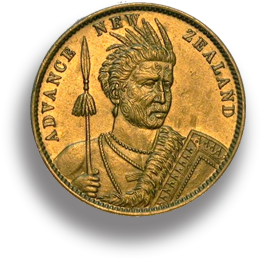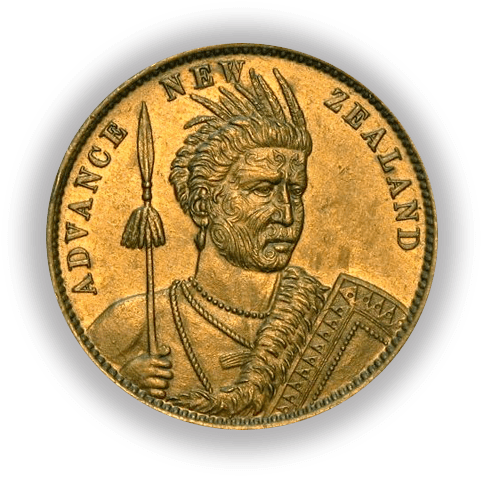
King's Silver Jubilee Portrait by Percy Metcalfe 1935.


NZNDA member








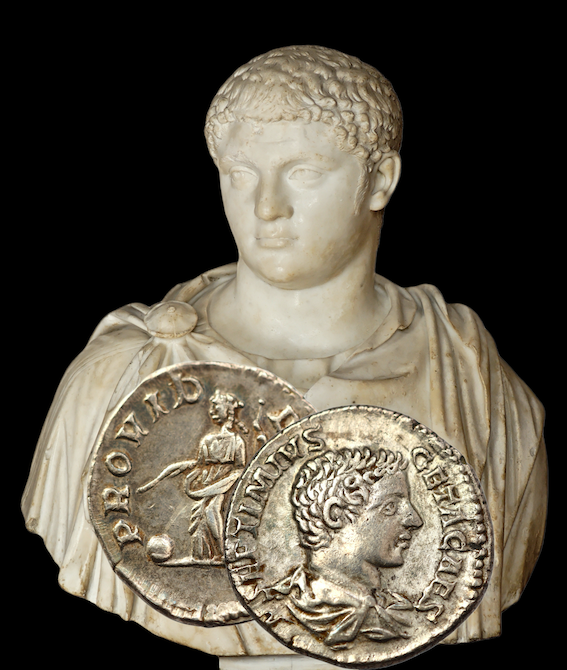
Publius Septimus Geta was born in Rome A.D. 189, the younger of two sons to Septimius Severus of the Severan Dynasty & his wife Julia Domna.
His father was born in Lepicis Magna, modern day Khoms in North Africa and ruled Rome as a military dictator, along with his sons Caracalla & Geta as Caesars.
Septimius Severus set out for Britain with a large army in excess of 35,000 soldiers in A.D. 208 after a plea by the localgovernor for help to combat rebellion in Caledonia, present day Scotland. Britain was at this time divided into two provinces, Britannia Superior (South) with Londinium (London) as its capital, and Inferior (North) with Eberacum (York) as its capital, this was to prevent too many troops being concentrated in the hands of a single governor who might try to usurp power.
For three years the Roman Empire was ruled from Britain.
The royal court with its bureaucracy was based in London or was it York, there are differing accounts.
Septimius now aged 63 and his sons fought in northern Caledonia with some degree of victory achieved, and declared in A.D. 209-10, Severus and Caracalla at the age of 20 assuming the title of Britannicus. Revolts soon took place, which on the orders of Severius were to eradicate the Caledonians were put down without mercy by Caracalla. Ir appears geta was at this time in Eberacum with his Mother taking care of the affairs of State. Severius now in poor health, has been suffering from gout for some time and exhausted he returned to Eberacum and died there at the age of 65 February 4th A.D. 211.
The troops acclaimed his sons as joint emperors.
The deathbed wishes of severius were for his sons to jointly inherit the throne
The joint rule was to last only 12 months, the two sons had fiercly quelled their entire life, their mother acting as mediator, it was to end tragically back in Rome with Geta's murder, Caracalla had his Praetorian Guards kill Geta in the arms of his mother, who was injured in the assassination. Caracalla attempted to eradicate Geta's memory and obliterate all records of his existence, Caracalla was himself later assassinated by a Roman soldier, his unfortunate mother Julia Domna at this time suffering from what is believed to have been breast cancer committed suicide.
The coin illustrated is a AR Denarius from the Rome mint A.D. 209-212, depicting Geta as Caesar with the Roman God Providentia on the reverse, a divine personification of the ability to foresee and make provision, which tragically did not work for him. The obverse reads Publius Septimius Geta, Caesar and the reverse, Foresight of the Gods.
Official souvenir medal. This exposition celebrated the opening of the Panama Canal on August 15th 1914, with the passage of the S.S. Ancon. It was meant to tout San Diego as the first port of call to the United States for ships traveling north after passing through the canal into the Pacific Ocean. Official Souvenir […]
Struck at mobile military mints. Roman Imperatorial Coinage 71-27 B.C. Civil War period 49 to 45 B.C. The silver denarius featured below was struck in 49 B.C. Featuring the image of an elephant serves as a fascinating artefact from one of the most pivotal eras in Roman history. This coin is often associated with Julius […]
This period in Greece was a time of significant political, cultural, and economic change. It witnessed the rise and fall of powerful city-states, the expansion of Greek influence across the Mediterranean, and Rome's eventual conquest.One of the most notable developments during this period was the standardization of coinage. This facilitated trade and commerce across the […]